
Divine Time
What my brain aneurysm and the lord's prayer taught me about time

Facing Mortality
About two years ago, I found out I had an unruptured aneurysm in my brain. A kind that could not be operated on. The neurosurgeon said, “The only thing you can do is go about your life and live as if it’s not there.” At first that sounded liberating ... .then about 10 minutes later it shifted in me. Yeah. Sure. Thanks. Easier said than done. One wrong day, one wrong sneeze, it felt like, and I would be toast.
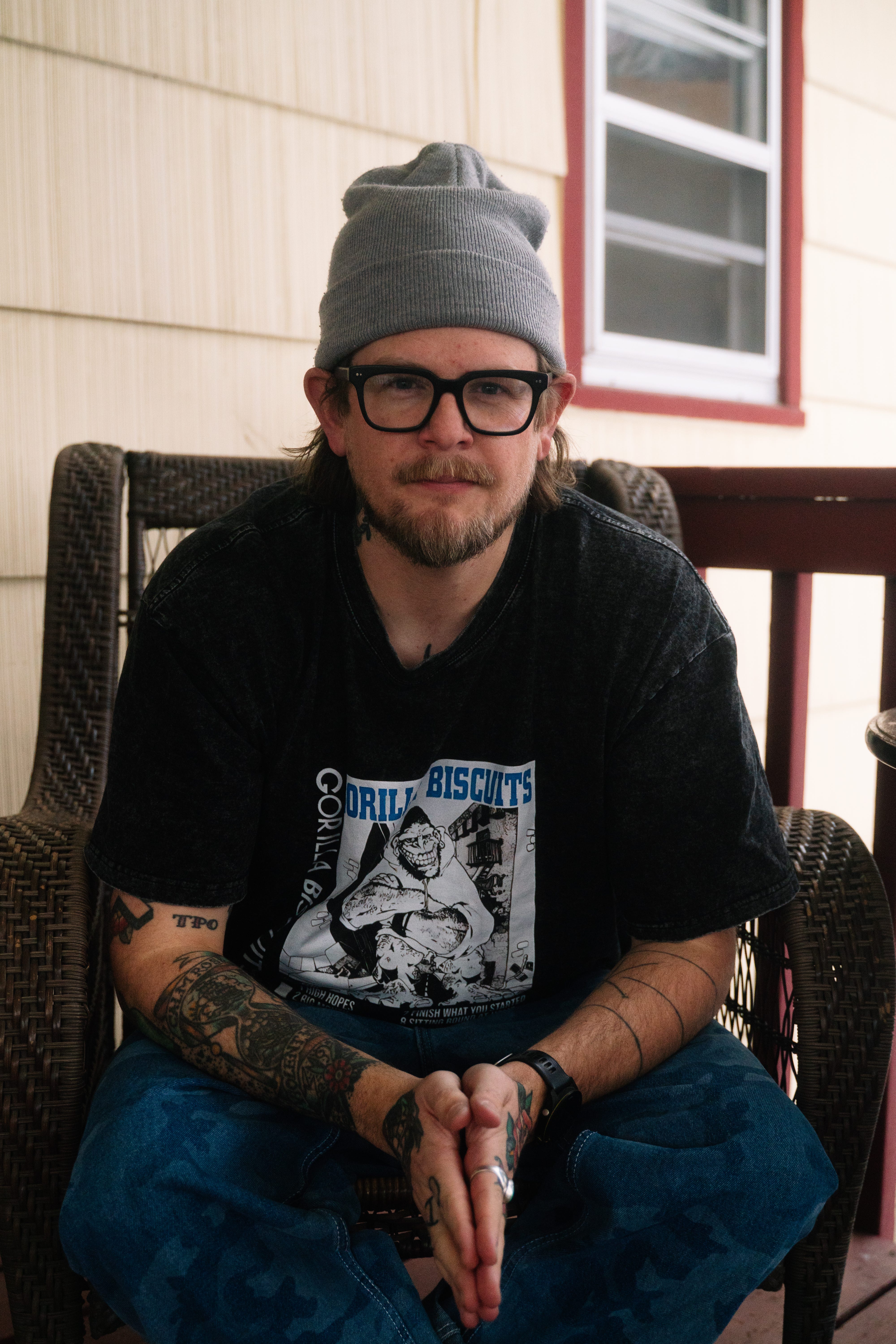
I cried in my car for what felt like forever, and then it hit me: mortality isn’t abstract anymore. It’s not a lecture you half-listen to at a funeral or an inspiring instagram post about the stoics. My new friend, this aneurysm, was a neon sign blinking above your head: time is real and it is limited.
Naturally, I asked myself the question no one wants to ask until they absolutely have to: If these were my last days, how the hell would I live?
Cue the bucket list. At first, it was small, the restaurant I wanted to try, the bands I wanted to see, the places I wanted to go with my family, but soon it grew into a goddamn novella. I am not short on passion or imagination; there were endless things I wanted to do, be, and see. What hit me with a crushing clarity was that even if I lived to ninety-five, I could never do it all. There would never be enough time.
Any remaining anxiety I could summon swelled as I realized that it wasn’t just about dying too soon. Even if I lived long, I would never do or become everything I could dream.
The Anxiety of Time
With or without an aneurysm, we all live under the tyranny of a clock. Not just in life, but in every damn thing. The subtle fear that we’re late: late to save money, late to heal, late to figure out who we’re supposed to be. The tyranny of time runs through our veins like the blood that keeps us alive. It whispers most every moment, hums beneath our scrolling thumbs, and gnaws at the edges of every choice we make.
It’s probably the most common theme in my coaching practice: “I should have started five years ago.” “They did it decades before me.” “What’s the point now?” The anxiety isn’t just about missed opportunities; it’s the weight of existence itself pressing down. There is simply never enough time to do what we feel we should, to be who we imagine ourselves becoming, to experience all the moments we hope to grasp. If we die today or in ninety years, the truth seems to be the same: there is just not enough time.
And yet, this is exactly the paradox of being human. We carry the grief of limited hours and the yearning for infinite possibility all at once. We hustle, we plan, we panic, thinking that if we move fast enough, we can cheat time, outrun it, or bend it to our will. But the clock is relentless, the hours fleeting, and the fear of falling behind is a shadow we can never fully shake. Every human life carries this weight, whether whispered in a doctor’s office or shouted in the quiet of our own heads.
For me, the origin of this fear started with my mother who was chronically ill for the majority of my life. Every day carried the shadow question: Will she be here tomorrow? While we made the most of our life the consideration of time lodged itself in me. As a result of this idea that time was scarce I learned to hurry, to squeeze life, to multitask like my nervous system’s life depended on it. Because somewhere deep down, it did.
Exhaustion felt noble. Urgency felt like love. Productivity felt like control.
Around a year ago, I was in a season of complete overwhelm. Multitasking too many projects, drinking too much Red Bull, and carrying a constant shame that I wasn’t doing enough, no matter how much I actually did. At a breaking point, I turned to breathwork. I spent about an hour trying to get out of my head and into my heart. I asked God what the hell was going on with this season of my life. God said, “Your multitasking isn’t ambition. It’s a trauma response.”
In that moment, something clicked. My constant effort, my endless doing, it wasn’t just ambition, scatterbrain tendencies, or even ADHD. It was the echo of a childhood spent under the shadow of my mother’s fragility, a nervous system shaped by the fear of losing her and by the urgent sense that life and time were always borrowed.
Think about that for a moment. How many of us carry patterns, habits, and urgencies that aren’t really ours? My patterns of hurry, my relentless need to do more, my guilt over never being enough they were inherited, passed down in the wiring of my nervous system as it related to the world I grew up in. Could it be that how we view time, is not an accurate depiction of how reality is, but it’s as much an inherited story as anything else.
Radical Presence = Divine Time
After the aneurysm, I realized there would never be enough time to do everything. And that led me to a life-changing realization. If I could not do everything, then I had to choose the few things I would do. It was no longer about what my priorities were, but about what my priority is. Not about dreaming big in a thousand directions, but about dreaming monumentally, cosmically big about the one thing I could not abandon.
This was my first invitation out of the bondage of scarce time and into the present moment, or what I often call Divine Time, which is endlessly abundant. The more I focused on one thing in the very present, the more time, hope, inspiration, and opportunities seemed to appear. It was as if the less I tried to control time, the more time I had.
It sounds comically simple, but until we let it unfold in our lives, it can be hard to see. For example, when I stopped trying to write three books at once and just focused on one, I ended up getting one published and a second written all in less than a year. The liberating truth continued to become clear: our arrival, our being on time, has nothing to do with clocks, goals, or milestones. It is measured by a rhythm of presence and the attention we give to this moment.
God is not pacing the room, tapping a foot, muttering, “Get a move on.” God delights in being with us. Even in our mistakes, our delays, our detours. The more fully we inhabit the moment we are in, giving it our attention and our all, the more we feel the Divine standing there with us and with that comes cosmic power and inspiration. The Divine is not somewhere in the future hoping we catch up. God is here, now, in the moment.
I often think that my endless time travel—worrying about the future, obsessing over all the shit I had to do or wasn’t getting done—kept me from seeing God in the present moment, from seeing where I was and what was actually happening. Only when I can truly be present can I see reality clearly, can I notice the opportunities, the love, and the guidance that have always been here, patiently waiting for me to stop rushing and simply be.
Daily Bread, Heaven, & Divine Time
The Lord’s prayer has become a place for me that speak a good bit into time. There are two major sections of this prayer that are , in part, inviting us to reorient ourselves around time in a new way.
First, Jesus invites us to pray for this day our daily bread. A radical call to the present moment. We are not taught here to pray for yesterday’s bread. That bread has gone stale, grown moldy, and cannot nourish us now. And we are not taught to pray for tomorrow’s bread, because that bread has not even been baked yet. It does not exist. It echos additional teachings of Christ “Do not worry about tomorrow, for tomorrow will worry about itself. Each day has enough trouble of its own.” There is a kind mercy in that. A grounding. An invitation to stop living in imagined futures or replayed pasts and instead root ourselves in what is real, right now.
Daily bread is about today. About what is in front of us. About trusting that what we need will meet us here. To pray for daily bread is to resist the urge to time travel. It is to come back into our bodies, back into this moment, and to trust that there is enough here to sustain us.
Then we are invited to pray, “on earth as it is in heaven.” In praying this, we are asking that a timeless, Divine, cosmic reality would enter into our soil-covered, flesh-and-bone lives that we inhabit as humans. To me, this prayer is as much about inviting a new perspective of time into our lived reality as it is anything else. In heaven, as I imagine it, there is no anxiety about being late. No scrambling to make the most out of limited hours. No quiet panic that life is slipping through our fingers. There is only presence.
And because of that, one can give their whole self to whatever is in front of them. No divided attention. No rushing ahead. Just a full, wholehearted presence to what is here.
This prayer is not just about a distant reality. It is about this one. Jesus is teaching us to pray in a way that forms us to live differently.
And I can’t help but wonder what would happen if we actually let these words shape us. If we let them rewire the way we move through time, the way we hold our lives. I think we would begin to see something beautiful unfold. Not all at once, but slowly, quietly, like light breaking through in places we didn’t know were dark. What if this prayer, the way of Jesus, is an invitation into a kind of rebellion? A rebellion against a world obsessed with time, driven by urgency, and haunted by the fear of being behind. What if we could begin to inhabit a different rhythm?
A rhythm where we are not constantly chasing the next thing or trying to make up for the past. A rhythm where we are not measuring our worth by how much we can fit into a day. What if this prayer is an invitation to live untormented by time? To be fully present. To trust that this moment is enough. To give ourselves completely to what is right in front of us, and to discover, maybe for the first time, that this is where life has been waiting for us all along.
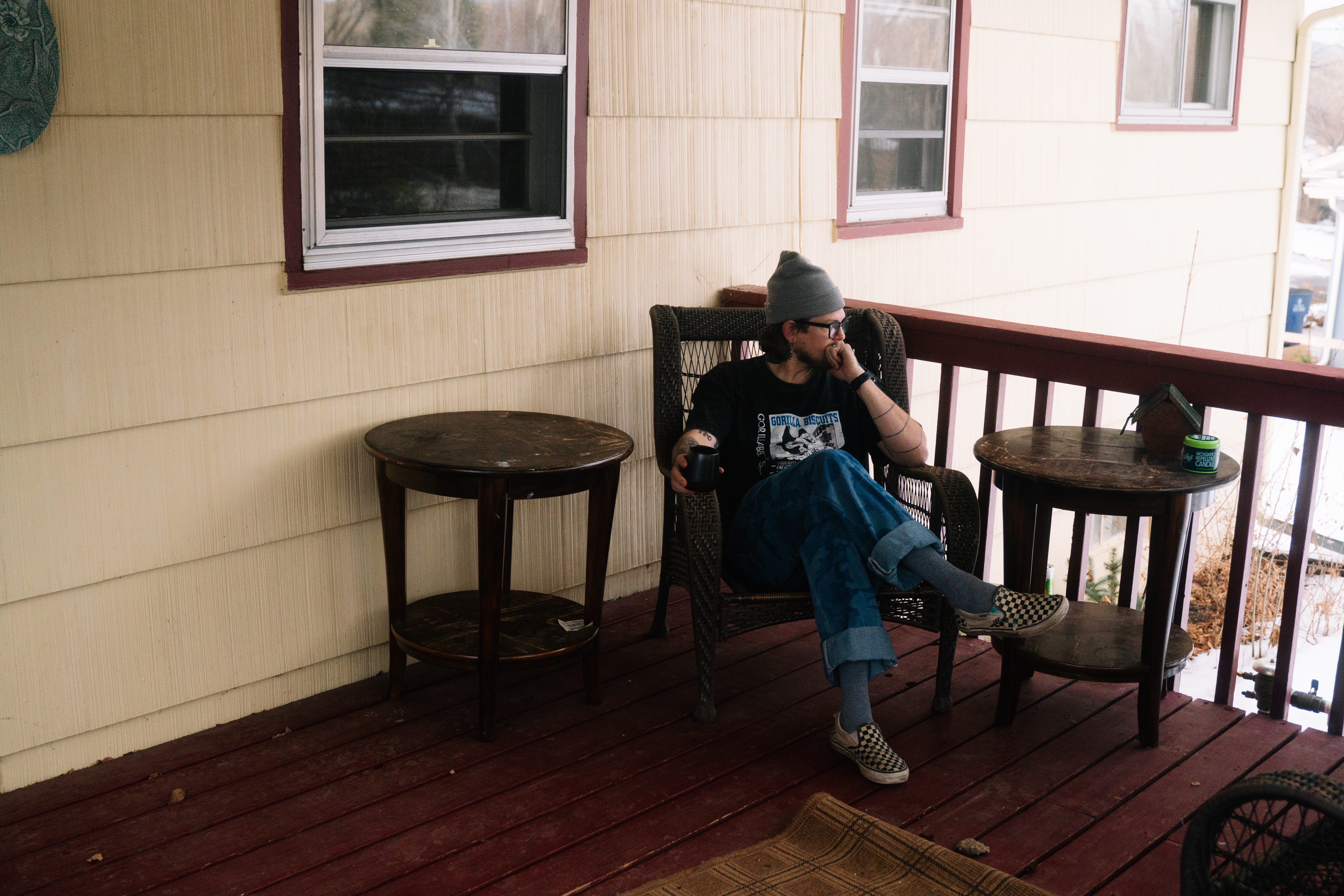
Present Potential
In the season after the aneurysm, I began to feel something I had never fully known: a sense of being held in time rather than chased by it. The patterns of hurry, the guilt over not doing enough, or having enough time began to soften. Not because I did more or accomplished more, but because I learned to give my whole self to the moment in front of me. I learned that presence, wholehearted attention, is to enter into Divine time.
Healing as it relates to time, I discovered, does not come from filling our hours with endless doing. It comes from inhabiting the now. It comes from offering our attention, our energy, our hearts fully to what is before us.
For it it was not in wishing my aneurism away so I can live fully, or in overworking myself because I had it. Both are inauthentic and dishonest. Freedom came from being honest that I might die and doing what I would do today anyways.
This is the invitation I offer to you: to live in the rhythm of Divine Time, to stop racing against clocks and inherited fears, to let go of the illusion that your worth depends on how much you do or how fast you move. Look at what is in front of you. Give it your presence, your love, your all. Trust that this is enough. Trust that this is where life—and the Divine—has been waiting for you all along.
Thank you for this. On my journey, I’ve also found to be helpful: https://www.amazon.ca/Jean-Pierre-De-Caussade/e/B000APA7US/ref=dp_byline_cont_book_1The Sacrament of the Present Moment: A Classic Jesuit Masterwork on Spiritual Enlightenment and Abandonment to God.
I hadn't thought of the Lord's Prayer in this way, but I think you're onto something. Someone taught me that the original Aramaic of the prayer translates to something closer to, "lead me not into forgetfulness, but deliver me from unripeness" which I think really speaks to what you are saying about presence and letting things unfold in God's timing. I think the book Prayers of the Cosmos talks about the Aramaic version of the Lord's Prayer.