
Wicked Hearts?
wicked? deceitful? not so fast.

Tragedy
“Be careful,” we were told. “Your heart can lead you astray. It can’t be trusted. It’s wicked.” An entire generation of Christians, a people whose spirituality is centered on God entering a human body, has been formed to be wary of their own bodies and, especially, the heart at the center.
We were taught to override the impulses of the soul and treat our inner voice with suspicion. If the heart longed for something, felt drawn somewhere, or sensed deeply, the safest response was often to question it immediately. Over time, many of us internalized a cautious posture toward ourselves. We learned to second-guess our instincts, to distrust our interior world, and some of us even lost the ability to recognize what was happening within us at all.
The consequences of this perspective reach far beyond theology. Beneath debates about doctrine is always a human being, a person with a story, trying to convince themselves and the world that they are wicked at their core. This is not an argument or debate; it is a tragedy. When someone pushes against these ancient teachings, I don’t see a critique of scripture; I see a person who truly believes what they are saying about themselves. It is heartbreaking.
How cruel would it be to hold a newborn in your arms and declare them evil, wretched, or destined for brokenness? It is ludicrous, scary, and harmful. Yet this is often exactly how we end up seeing ourselves—a profound and sorrowful tragedy.
When someone allows their spirituality to move beyond mere intellect, they begin to see that these messages do more than distort self-perception; they shape our relationship with the Divine. If the deepest part of you is considered inherently corrupt, what does that say about the creature God made? And what does it say about the Creator? These reflections become more than theological ideas. They are beliefs projected onto both ourselves and God, creating a cycle of unnecessary wickedness that was never truly there.
This belief also hinders our ability to recognize God’s image in others. As we view our hearts as untrustworthy, we see ourselves as dangerous villains in our own story, and suddenly, the invitation to love our neighbors as ourselves is twisted. We project the same suspicion we feel toward ourselves onto everyone around us.
It is no wonder that much of modern Christianity, particularly in the West, often feels more divisive than unifying. A faith built on suspicion of our own hearts produces more critics than disciples, more adversaries than allies, fostering a culture of fear, self-denial, and mistrust. When we cannot perceive the goodness and divine image within our own hearts, it becomes nearly impossible to recognize the love and dignity others—especially those on the margins—truly deserve.
Relationships, communities, and even spiritual practices risk becoming battlegrounds rather than spaces of grace. For a spirituality that repeatedly teaches us not to fear, it is striking how often we end up fearing the very thing at the center of our spiritual and physical being: our own hearts and, by extension, the hearts of everyone around us.

How Did We Get Here?
When I hear someone desperately insisting that their heart is bad, that something essential inside them is wrong, waves of sadness swell within me. I pray that parents, teachers, missionaries, and grandparents do not carry and teach these same burdens. What a heavy and unnecessary weight.
How did the story of a God who calls creation good, who breathes life into humanity, who places the kingdom of God within us, become a story where people feel compelled to argue for their own corruption? From the beginning, God has spoken goodness over us, breathing life into our first moments, whispering in our deepest selves, naming us beloved, calling us holy. Somewhere along the way, we began to doubt that voice, forgetting that the same God who calls all creation good calls us good too.
What if the deepest part of you is not the enemy? What if the truest part of you, the part God designed to be good, beautiful, and whole, is not something to fear but something to listen to and trust?
The Wisdom of the Heart
The verse often used to support this harmful view, Jeremiah 17:9, says, “The heart is deceitful above all things and desperately wicked.” It is quoted with certainty, often as the final word. Do not follow your heart. Do not trust your desires. Do not listen too closely to the voice within.
A closer look at the Hebrew changes the story. The word translated as “deceitful,” ‘aqov, can mean crooked or difficult to grasp, but it also conveys something winding, layered, or complex. Some ancient translations render the verse, “The heart is deep beyond all things.” Not deceitful, but deep.
The human heart is complicated. It holds grief and longing, wounds and wisdom, fear and love. Depth can feel confusing, even deceiving, especially in a world that prizes quick answers and certainty. But complexity is not corruption. The heart is not shallow; it is layered. The challenge is not wickedness, but the patience, presence, and honesty required to truly listen. It is easier to declare the heart bad than to do the work of interior reflection, discerning the wisdom God has placed within us.
Within the heart’s depth, wisdom resides. The heart that has endured struggle, wrestled with longing, and sat quietly with sorrow becomes a wellspring of insight. Like an old grandmother who has lived a rich and complex life, a heart that has navigated joy and pain carries wisdom that cannot be reduced to good or evil. The deeper we go, the more the heart emerges not as a source of confusion but as a guide, full of intuition and understanding.
Wicked
When people hear “wicked” in Jeremiah 17:9, it is easy to internalize it as “my heart is fundamentally corrupt.” This is not the wisdom of God. It is not how God sees you, and it is not who you are.
The Hebrew word ra’, translated as wicked, is far more nuanced than modern English allows. Biblical Hebrew rarely speaks in absolute terms like “utterly wicked.” In context, the heart can be misguided, self-centered, or misaligned, but it is not inherently corrupt, and it is certainly not beyond renewal (see Ezekiel 36:26: “I will give you a new heart”). The “wickedness” refers to human tendencies to wander, deceive oneself, or act out of fear or ego, not an eternal condemnation of being. The nuance is complexity, misdirection, or difficulty, not foundational corruption.
Which is to say, the work is not to declare yourself bad, but to ask, “Is this the self God created speaking here, or is this fear, ego, or an old wound?” To do this, we must first trust that the heart is not wicked. We must believe it is deep, layered, and wise, capable of holding grief, joy, and insight all at once. Only from this starting point can discernment unfold.
Ancient Wisdom
This is not a new idea. The invitation to trust the depth of the heart is ancient, woven into the fabric of Christian wisdom long before modern interpretations emphasized suspicion and fear. The desert fathers and mothers, Christian mystics, and monastic elders all understood that the heart is a sacred space where God’s voice can be heard. Richard Rohr writes, “The contemplative life is a call to be present to the movement of God in the depths of your being.” Joan Chittister reminds us, “The spiritual life is not an escape from reality; it is a confrontation with the self that leads to transformation.”
St. Benedict, writing nearly fifteen hundred years ago in his Rule, exhorts his followers to “listen with the ear of your heart.” This is a disciplined spiritual practice. Benedict understood that the heart is where the divine speaks most clearly, but hearing it requires patience, attentiveness, and humility. Thomas Merton echoed this wisdom, saying, “The real problem of our time is that we are out of touch with our interior life.”
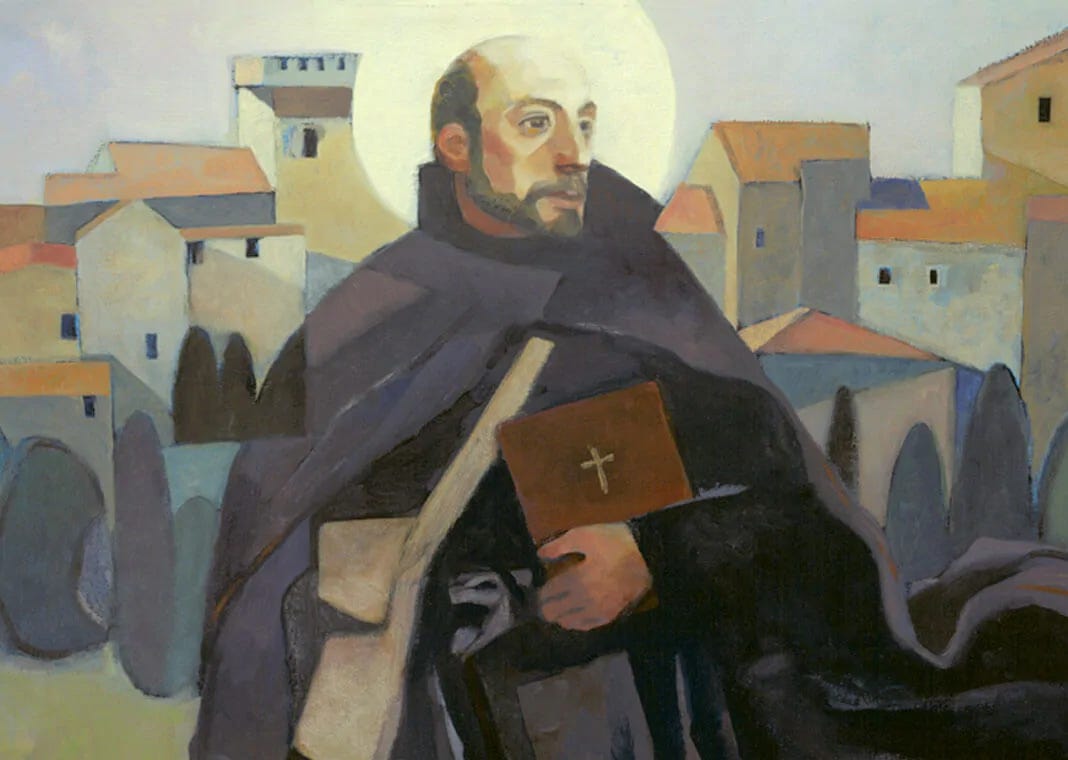
Jesuit spirituality adds a complementary lens. Ignatius of Loyola taught discernment of spirits through consolation and desolation. Consolations: Those stirrings of peace, clarity, and love are signposts of God’s presence. Desolations: Experiences of emptiness or agitation. A call for reflection and patience, not panic or judgment. This practice reinforces what the mystics and monastic elders always knew: the heart is a living space of guidance, capable of insight when cared for.
Scripture affirms the heart’s central role, not as a source of corruption but as a place of God’s formation and goodness. Proverbs 4:23: “Above all else, guard your heart, for it is the wellspring of life.” Ezekiel 36:26: “I will give you a new heart and put a new spirit within you; I will remove from you your heart of stone and give you a heart of flesh.” Psalm 51:10: “Create in me a pure heart, O God, and renew a steadfast spirit within me.” These passages show a heart that is responsive, moldable, and capable of reflecting God’s love.
Modern teaching that portrays the heart as fundamentally untrustworthy is new, born of fear, misunderstanding, or cultural interpretation. Ancient wisdom tells a different story: the heart is deep, capable of insight, and oriented toward God. Learning to listen to it is learning to recognize God’s guidance, an invitation far older than any modern doctrine that suggests otherwise.
How This Impacts Our Life
The way we view our hearts shapes everything. If we believe our heart is untrustworthy, we carry a quiet tension inside us. We second-guess our desires, doubt our instincts, and defer responsibility for our lives. Fear and suspicion become default modes, making it hard to act with courage, love fully, or trust others. We live half-alive, always measuring whether we are “good enough” or “holy enough” to be loved. In doing so, we abandon the design God placed within us, living out of alignment with our destiny, gifts, and passions.
But when we see our hearts as deep, wise, and oriented toward God, everything changes. The heart becomes a guide, not a threat. We discern fear from God’s voice. We notice stirrings of compassion, courage, and intuition. As we listen to our hearts, we step fully into our lives and become more of our true selves rather than who shame or expectation has told us to be. Relationships deepen, decisions become clearer, and the love and wisdom God has placed within us can flow outward.
You are not an accident. You were created with intention, with depth, with a heart capable of reflecting God’s love. As the Jesuits teach, pay attention to your consolations—those moments when your heart feels alive, stirred by love, truth, or beauty. Let them guide you. Trust your heart, follow its wisdom, and step into the life God designed for you. God’s image is within you, and the world needs the fullness of your unique self to shine.